Tropical African Flowering Plants, Ecology and Distribution,
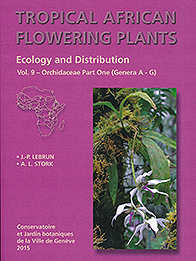
Vol. 9 – Orchidaceae Part One (Genera A – G), 2015.
door/by Lebrun J.-P. & Stork A.L.
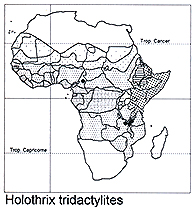
248 pp., 1 Zw-W/Bl-Wh illustration, 1 pentekening/pen drawing, a distribution map for each species in this volume.
ISBN: 978-2-8277-0133-9
&
Tropical African Flowering Plants, Ecology and Distribution,
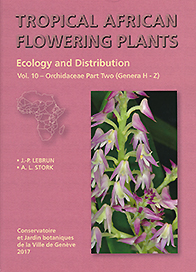
Vol. 10 – Orchidaceae Part Two (Genera H – Z), 2017.
door Lebrun J.-P. & Stork A.L.
349 pp., 2 Zw-W/Bl-Wh illustrations, a distribution map for each species in this volume.
ISBN: 978-2-8277-0135-3
Beide volumes zijn uitgegeven door het Conservatoire et Jardin Botanique de la Ville de Genève.
Deze boeken zijn als erkentelijkheid opgedragen aan Daniel Geerinck, een Belg die enorm veel studiewerk verzet heeft in verband met de kennis van de orchideeën in de Democratische Republiek Congo.
Het valt op dat de auteurs nog steeds de naam Zaïre gebruiken voor de Democratische Republiek Congo. Hun motivatie: verwarring vermijden met Congo-Brazzaville. Het zij zo!
In de twee volumes komen in het totaal 87 orchideeëngeslachten en 1340 -species van het Afrikaanse vasteland aan bod. Een tabel in volume 10 geeft een opsomming van alle orchideeëngeslachten met daarbij een overzicht van ontbrekende info over de habitus van de plant, de bloemen, de ecologie en het herbariummateriaal.
Dat het Afrikaanse vasteland niet rijk is aan orchideeënsoorten is gekend. Vele soorten hebben kleine, onopvallende bloemen. Hun bloemstengels daarentegen vormen brede, aantrekkelijke bloemenwaaiers die veel orchideeënliefhebbers zeker weten te waarderen.
Vol. 9.
In dit volume komen 40 orchideeëngeslachten en 555 soorten aan bod. Dat is de helft van alle gekende soorten voor tropisch Afrika. Enkele van die soorten zijn onvoldoende gekend, een dertigtal zijn alleen van hun typespecimen gekend.
Na dankzeggingen en de korte introductie wordt ons een eerste, uitgebreide bibliografie voorgesteld met ‘General References (Tropical Africa)’ (Referenties) en ‘Additional useful literature’ (Bijkomende nuttige literatuur) (p. 9-10). Dan wordt uitgelegd hoe het boek te gebruiken is: de tekst en de interpretatie van de distributiekaarten (p. 11-12).
Een volgende hoofdstuk ‘Introduction and bibliography’ (Introductie en bibliografie) met Orchidaceae – Introductory notes (Tot Orchidaceae introducerende noten): info die eigenlijk reeds gekend moet zijn door reeds gevorderde orchideeënkenners (p. 13-19) en een tweede, zeer belangrijke bibliografie met verwijzingen naar: General literature, Flower morphology (Algemene literatuur, morfologie van de bloemen) – Pollination, Conservation aspects, Phylogenetics (Bestuiving, in stand houden, fylogenetische aspecten) – Classification, Nomenclature (Classificatie en nomenclatuur), General systematics & manuals, Africa (Algemene systematiek): floras, checklists and articles by area (Tropical) Africa; general, Flora of West Tropical Africa area (incl. Mauretania eastwards to Chad), West-central tropical Africa, North-east and east tropical Africa, Flora Zambesiaca area, adjacent South Africa – Angola, Madagascar.
In een vijfde hoofdstuk ‘The Checklist’ Orchidaceae part 1 (Genera A-G)’ komen in alfabetische volgorde de geslachten aan bod en de soorten binnen die geslachten: Acampe Lindl. tot Gymnochilus Blume.
Van elke soort worden vermeld: bibliografische referenties, indien nuttig, die naar monografieën of artikels verwijzen, basioniem en synoniem, een korte beschrijving, ecologische informatie, enzovoort… Er is per soort ook een verspreidingskaart, uitzonderlijk staan twee soorten op één kaart.
Het boek eindigt met een index tot de in dit volume vermelde genera.
Vol. 10:
In dit volume komen 47 orchideeëngeslachten een 783 species aan bod.
Na dankzeggingen wordt uitgelegd hoe het boek te gebruiken is: de tekst en de interpretatie van de distributiekaarten (p. 8-9). Op p. 11-12 volgt een uitgebreide bibliografie. Een ‘Statistical Summary’ (p. 13) geeft een kort overzicht van de geslachten, van geslachten met veel soorten (large genera) tot geslachten met minder dan 5 soorten (small genera), en het aantal soorten binnen de geslachten. Een tabel (p. 14-15) geeft een opsomming van alle orchideeëngeslachten met daarbij een overzicht van ontbrekende info over de habitus van de plant, de bloemen, de ecologie en het herbariummateriaal.
In ‘The Checklist’ Orchidaceae part 2 (Genera H-Z)’ komen in alfabetische volgorde de geslachten aan bod en de soorten binnen die geslachten: Habenaria Thouars tot Zeuxine Lindl.
Van elke soort worden vermeld: bibliografische referenties, indien nuttig, die naar monografieën of artikels verwijzen, basioniem en synoniem, een korte beschrijving, ecologische informatie, enzovoort… Er is per soort ook een verspreidingskaart, uitzonderlijk staan twee soorten op één kaart.
Volume 10 eindigt met enkel pagina’s ‘Genera A-G: Corrections and Additions (p. 337-344),een index tot de in beide volumes vermelde genera.
Conclusie.
Ik zie deze beide volumes als een belangrijk en nuttig referentiewerk met zeer interessante referenties. Het is een boek dat niet zal misstaan in de bibliotheek van elkeen die met de studie van Afrikaanse orchideeën bezig is.
top
Both books are published by the Conservatoire et Jardin Botanique de la Ville de Genève.
These books are dedicated to Daniel Geerinck, a Belgian who has done a lot of study work in connection with the knowledge of the orchids in the Democratic Republic of Congo.
It is noteworthy that the authors still use the name Zaire for the Democratic Republic of Congo. Their motivation: avoiding confusion with Congo Brazzaville. So be it!
In the two volumes, a total of 87 orchid genera and 1340 species from the African mainland will be discussed. A table in volume 10 lists all orchid genera with an overview of missing information about the habitus of the plant, the flowers, the ecology and the herbarium material.
That the African mainland is not rich in orchid species is known. Many species have small, inconspicuous flowers. Their flower stems, on the other hand, form broad, attractive flower fans that are sure to be appreciated by many orchid enthusiasts.
Vol. 9.
This volume covers 40 orchid genera and 555 species. That's half of all known orchid species in tropical Africa. Some of these species are poorly known/understood, about thirty are only known from their type specimen.
After acknowledgments and an introduction the book presents an extensive bibliography with ‘General References (Tropical Africa)’ and ‘Additional useful Literature’ (p. 9-10).
Then is explained how to use the book: texts and interpretation of the distribution maps (p 11-12).
A next chapter 'Introduction and Bibliography' with Orchidaceae Introductory notes (information that actually should been known by those already advanced in orchid knowledge) (p. 13-19) and a second, very important bibliography with references to: General Literature, Flower morphology – Pollination, Conservation aspects, Phylogenetics - Classification, Nomenclature (types), General systematics & manuals, Africa: floras, checklists and articles by area (Tropical) Africa; general, Flora of West Tropical Africa area (including Mauretania eastwards to Chad.), West-central tropical Africa, North-east and east tropical Africa, Flora Zambesiaca area, adjacent South Africa - Angola, Madagascar.
In the fifth chapter, ‘The Checklist Orchidaceae Part 1 (Genera A-G)’ the genera are covered in alphabetical order and species within those genera: Acampe Lindl. to Gymnochilus Blume (= synonym of Cheirostylis Blume.
For every species is given: bibliographic references, when useful, referring to monographs and articles, Basionym, synonyms, a brief description, ecological information, and so on ... There is a distribution map for every species, exceptional two species are on one map.
The book ends with an index to the genera mentioned in this volume.
Vol. 10.
In this volume covers 47 orchid genera and 783 species.
After acknowledgements is explained how to use this book: the text and the interpretation of the distribution cards (pages 8-9). On p. 11-12 follows an extensive bibliography. 'Statistical Summary' (p.13) provides a brief overview of the genera, from genera with many species (large genera) to genera with less than 5 species (small genera), and the number of species within the genera. A table (p. 14-15) lists all orchid genera with an overview of missing information about the habitus of the plant, the flowers, the ecology and the herbarium material.
In 'The Checklist' Orchidaceae part 2 (Genera H-Z) the genera and the species within those genera are covered in alphabetical order from Habenaria Thouars to Zeuxine Lindl.
For every species is given: bibliographic references, when useful, referring to monographs and articles, Basionym, synonyms, a brief description, ecological information, and so on ... There is a distribution map for every species, exceptional two species are on one map.
Volume 10 ends with some pages 'Genera A-G: Corrections and Additions' (pp 337-344), an index to the genera listed in both volumes.
Conclusion.
I see these two volumes as an important and useful reference work with very interesting references. It is a book that will find his place in the library of anyone who is studying the African orchids.
top